

Funding Cuts and Workforce Strain Threaten HIV Progress, HealthHIV Survey Finds

Funding Cuts Are Closing HIV Programs and Reducing Services
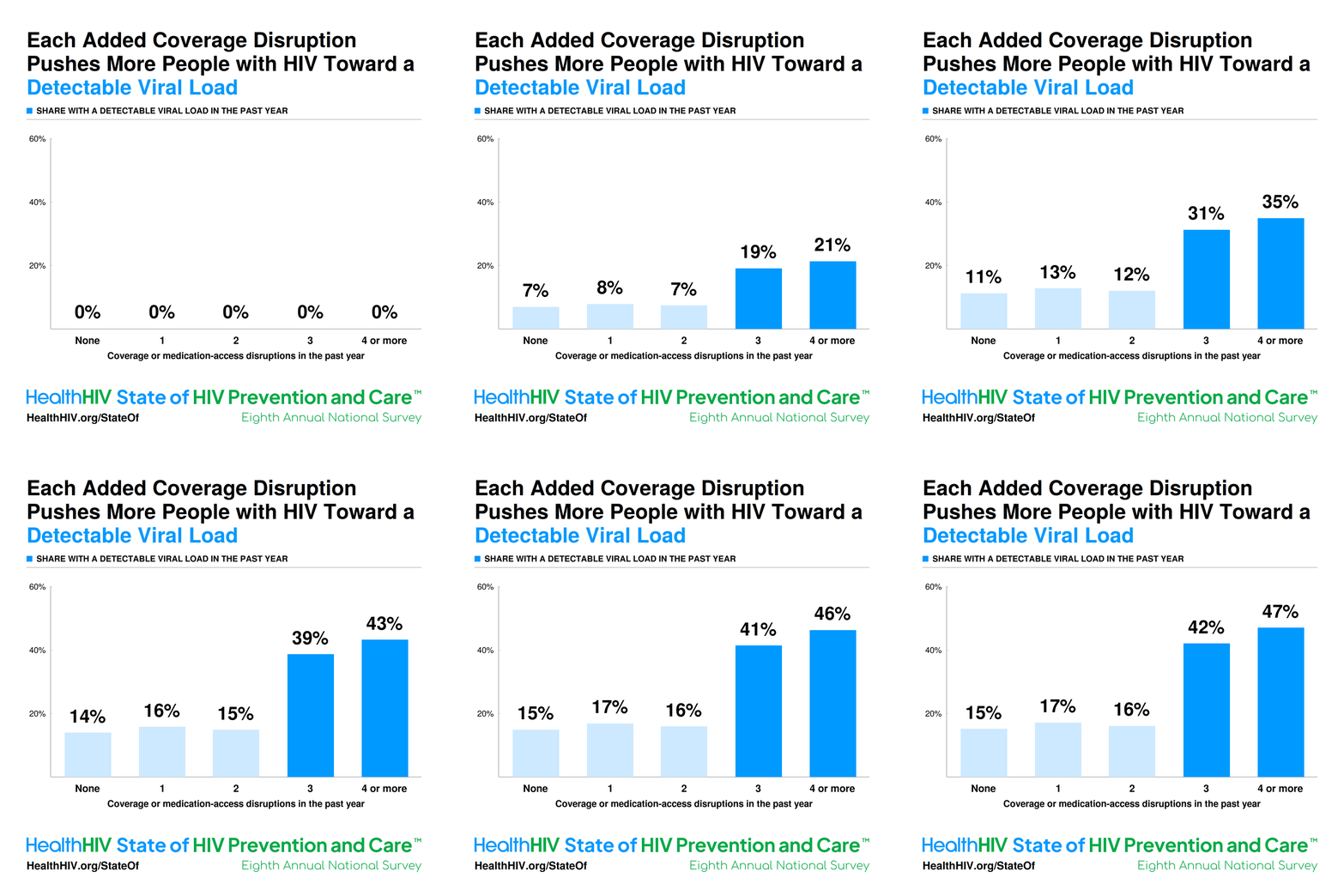
Each Disruption in Coverage Pushes More People with HIV Toward a Detectable Viral Load

HealthHIV State of HV Prevention and Care Survey Key Findings
Funding Cuts, Service Disruptions, and Workforce Strain Threaten Three Decades of HIV Progress, According to HealthHIV State of HIV Prevention and Care™ Survey
Read the press release, visual assets, and full State of HIV Prevention and Care National Survey Report at HealthHIV.org/stateof/hivcare.
The full report details findings across six domains:
* HIV Prevention covered PrEP awareness, access, and cost, including long-acting injectable lenacapavir, and viral suppression.
* HIV Treatment and Comorbidities examined rapid ART start, regimens and adherence, polypharmacy, co-infection screening, vaccines, and primary care.
* Behavioral Health focused on discrimination, HIV and PrEP stigma, mental health, and legal worries that deter care.
* Access addressed coverage and cost across private insurance, RWHAP/ADAP, Medicare, and Medicaid, and telehealth.
* Workforce examined burnout, harassment, training needs, and intent to stay.
* Service Delivery details services provided and how funding disruptions affect them.
Funding Disruptions Threaten the Health of People with HIV
The last 12 months brought deeper cuts to HIV prevention and care services than the pandemic. Over three-fourths of providers reported funding cuts, delays, or losses. Program closures rose from 10% in 2022 to 15% in 2026, and service reductions from 18% to 29%. Organizations funded by the Ryan White HIV/AIDS Program (RWHAP) were hit hardest (83% vs. 58% without RWHAP funding). As one provider said, “HIV care has progressed greatly, but with funding reductions I fear our program may close.”
Viral suppression among respondents with HIV was above the national average (97% vs. 69%) but lower among those earning $25,000 or less. One in five people with HIV who had Medicaid lost that coverage within the past two years, and each added disruption in care increased the odds of a detectable viral load (15% with no disruption vs. 47% with four or more). More than half of people aging with HIV (52%) took five or more medications daily, and they reported more discrimination and lower quality of life than younger respondents.
Urban providers report offering injectable ART at about three times the rate of rural providers (79% vs. 27%). Over half of Black PrEP users (56%) lost work in the past year, nearly three times the rate of white respondents. Transgender and gender-diverse respondents lost Medicaid at two and a half times the rate of others (33% vs. 13%), and three in four transgender and gender-diverse PrEP users reported deadnaming, misgendering, or misrecording in medical, insurance, and pharmacy records.
The Political Climate Increasingly Stresses People with HIV, Deterring Testing, PrEP, and Care
More than half of people with HIV (61%) reported everyday discrimination, and one in four rated their mental health as fair or poor. As one person with HIV noted, along with medical stigma, they are constantly dealing with “legally deployed physical, emotional, spiritual, and vocational stigma.” Nearly half of people with HIV (46%) and a third of PrEP users (32%) said political or social change had increased their stress, and nearly half of PrEP users (47%) said legal or law-enforcement concerns affected whether they sought PrEP or HIV testing.
“Viral suppression and engagement in HIV care look strong among our survey respondents, but we are more than the sum of our viral loads,” says Scott D. Bertani, HealthHIV Director of Advocacy and a long-term survivor. “We’re hearing providers and people with HIV describing funding disruptions, coverage losses, reduced support services, workforce strain, and broader health and quality-of-life challenges. We shouldn’t wait for those pressures to show up in clinical markers or people falling out of care before addressing them through better federal and state policy that supports the local systems of care where people experience them.”
The First Services Cut Are the Ones That Get Patients Through the Door
Nearly six in ten people with HIV (57%) reported at least one coverage or medication-access disruption in the past year. The services most affected by funding changes are those that keep people in care: gender-affirming care (59%), housing support (55%), transportation support (47%), and community outreach and mobile services (42%). As one provider said, “It is hard to provide care and combat stigma for people that our nation is marginalizing … the people that need these services most.”
Over a Quarter of HIV Providers Plan to Leave the Workforce in Five Years
More than one in four providers (26%) planned to leave the HIV workforce. Monthly emotional exhaustion rose from 55% in 2024 to 63% in 2026, and those providers had 3.6 times the odds of leaving the HIV workforce within five years. Providers under age 40 were 2.8 times more likely to report that their organization faced threats, harassment, or safety concerns.
“The HIV workforce was overwhelmed and shrinking before now,” says HealthHIV Senior Director of Research and Evaluation Dr. Circe Gray Le Compte. “Funding threats and disruptions have taken a toll on providers, especially younger providers.”
Priorities for Action
The report sets out nine priorities for action, including protecting RWHAP, ADAP, and Medicaid; paying community organizations to offer long-acting options; funding care coordination, transportation, and housing as core services; and investing in workforce retention.
Alignment with the HealthHIV State of Aging with HIV™ National Survey
Findings align with the HealthHIV State of Aging with HIV™ Fifth Annual National Survey, released in May 2026. In both, quality of life decreased with each added comorbidity and barrier to care, and providers showed signs of strain.
About the Survey
HealthHIV fielded the survey from May to July 2026 across 47 states and territories, reaching 627 providers, 461 people with HIV, and 119 PrEP users. The full report includes methods and all question-level responses.
About HealthHIV
HealthHIV is a national non-profit advancing prevention, care, and support
Dr. Circe Gray Le Compte
HeathHIV
+1 202-352-7240
Visit us on social media:
LinkedIn
Instagram
Facebook
YouTube
X
Legal Disclaimer:
EIN Presswire provides this news content "as is" without warranty of any kind. We do not accept any responsibility or liability for the accuracy, content, images, videos, licenses, completeness, legality, or reliability of the information contained in this article. If you have any complaints or copyright issues related to this article, kindly contact the author above.
